The Division of Perioperative Medicine brings together anesthesiologists with expertise in preoperative evaluation, patient optimization, perioperative risk assessment, and postoperative recovery.
Through a collaborative, multidisciplinary approach, division faculty work with surgeons, primary care physicians, advanced practice providers, nurses, and other specialists to improve outcomes for patients undergoing surgical and procedural care.
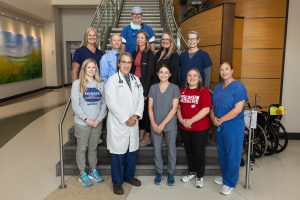
As surgical care becomes increasingly complex, perioperative medicine plays a critical role in identifying modifiable risk factors, coordinating care across specialties, and ensuring patients are prepared physically and medically for surgery. Division faculty provide leadership for perioperative initiatives throughout UW Health, including Enhanced Recovery After Surgery (ERAS) programs, frailty assessment, perioperative quality improvement efforts, and development of evidence-based clinical pathways.
The division serves as the academic home of the UW Health Pre-Anesthesia Clinic and supports innovations in patient optimization, perioperative outcomes research, and education. Faculty are actively engaged in teaching medical students, residents, fellows, and advanced practice providers, helping prepare the next generation of perioperative physicians.
As UW Health continues to expand its surgical enterprise, the Division of Perioperative Medicine will play an increasingly important role in advancing patient-centered, evidence-based care across the continuum of surgery.

Division Highlight
The UW Health Pre-Anesthesia Clinic helps patients prepare safely and effectively for surgery through comprehensive preoperative evaluation and risk assessment. A multidisciplinary team of nurses, advanced practice providers, and physicians evaluates patients based on their individual health conditions and surgical risk, with consultations available both in person and through telehealth. By identifying and addressing potential concerns before surgery, the clinic helps reduce complications, delays, cancellations, hospital stays, and readmissions while supporting a smoother surgical experience for patients.